If you've searched Chestertown home prices this year, you've seen the number. Listings sat at a median of roughly $382,000 to $383,000 in August 2026, and Zillow's estimate of what homes here are actually worth was running higher still, around $396,000. Those numbers tell you what a house costs. They don't tell you why the county's own planning staff have spent the past several months publicly worried about a gap between that price and what Chestertown families actually earn.
Kent County's planning director laid out the math plainly in a report earlier this year: the county's median household income, about $72,000, supports a home purchase closer to $250,000. The county's median home sale price sits nearer $350,000. Inside Chestertown town limits, where prices run above the county average, that gap is wider. This isn't a secret buried in a spreadsheet. It's the reason two specific developments are under construction right now, and understanding them tells you more about where this market is headed than the median ever will.
"People aren't developing anywhere in Kent County, just to be brutally honest."
That's Carla Gerber, the county's director of planning, housing and zoning, describing why the gap has persisted even after the county loosened its zoning rules. The land is there. The zoning allows it. What's been missing is construction that lands at a price working households can actually afford, and that's starting to change.
Where the Gap Actually Sits
The county-wide numbers and the Chestertown numbers aren't the same market, and conflating them is where a lot of casual research goes wrong. Kent County as a whole has a median sale price closer to $350,000. Chestertown, as the county seat and largest town, runs above that: a median list price near $382,000 as of August 2026, per portal data, down slightly (3 to 4 percent) from a year earlier. Price per square foot moved the same direction, down about 4 percent year over year to roughly $237.
Meanwhile Zillow's home value estimate for Chestertown, which measures what existing owned homes are worth rather than what's currently listed, was up 1.5 percent over the same period, to about $396,000 as of the end of July 2026.
Those two numbers moving in opposite directions isn't a contradiction. It's a market in transition, and the reason has a name: new supply that doesn't exist yet is already changing how existing homes get priced.
Why the Fix Is Landing Inside Town, Not Out in the County
Here's the part that doesn't show up in a portal search. Kent County's planning office added roughly 2,300 acres where one-acre residential development is now permitted, following a countywide Unified Development Ordinance adopted in July 2025. On paper, that should have opened up affordable construction everywhere in the county. In practice, unincorporated areas still see only 20 to 30 building permits issued a year, and not all of those turn into finished homes.
The reason comes down to something that never shows up in a median price: water and sewer. Higher-density, lower-cost housing needs public utility infrastructure that mostly exists inside incorporated towns like Chestertown, and mostly doesn't exist in the surrounding countryside. Building smaller, denser, more affordable homes on rural land means the developer pays for utilities from scratch. Building inside Chestertown means plugging into a system that's already there. That single cost difference is why the county's most promising affordability projects are showing up on the streets of the town itself, not scattered across the acreage the zoning change technically opened up.
The same logic played out at the state level. Maryland's Housing Expansion and Affordability Act, which took effect January 1, 2025, barred jurisdictions from excluding manufactured or modular homes from any zone that already allows single-family houses. Kent County's follow-up ordinance treats a HUD-certified manufactured home on a permanent foundation the same as a site-built house, and the county already has a working example to point to: the 91 cottages at the Heron Point retirement community in Chestertown, factory-built and standing for more than three decades without most visitors ever realizing it.
What's Actually Under Construction
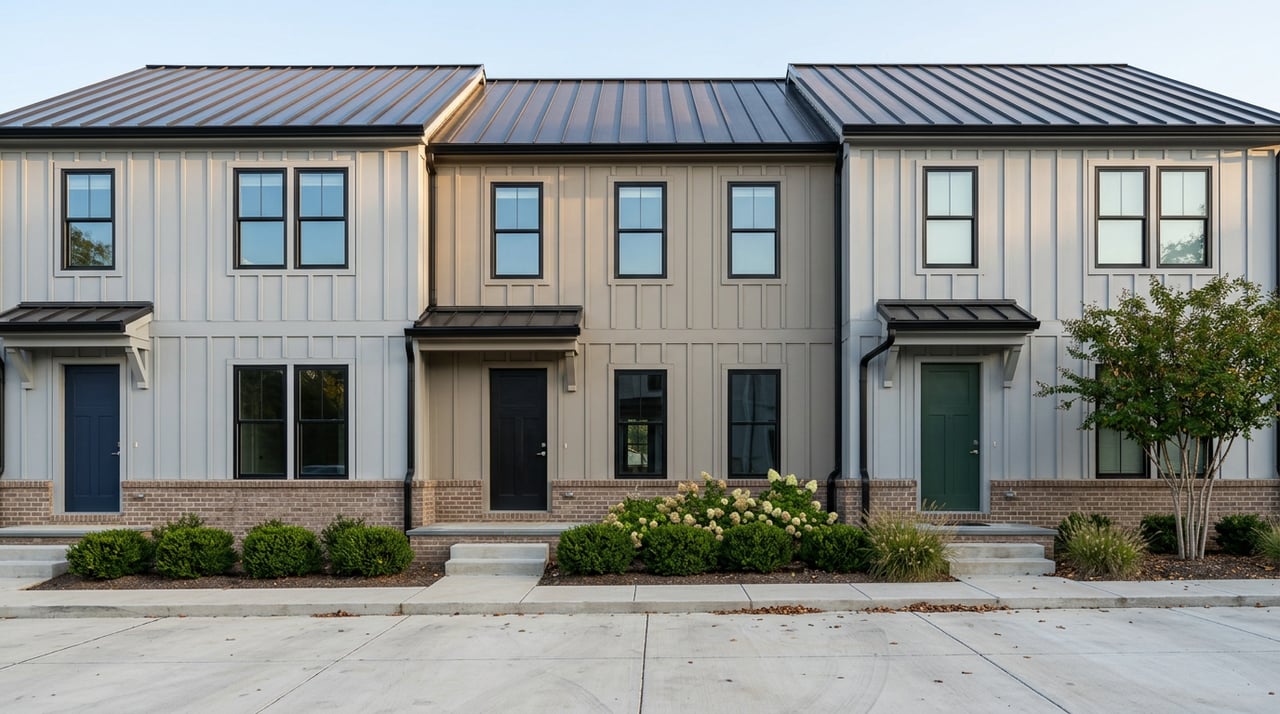
Two developments account for most of the near-term supply, and they're aimed squarely at the price point the county says is missing.
| Development | Location | Units | Builder | Price point |
|---|---|---|---|---|
| Radcliffe Meadow | Off Talbot Boulevard | 74 single-family homes, 74 townhouses | Ryan Homes of Delaware | Not yet listed |
| Chester Arms (next phase) | Near Kent Plaza Shopping Center | 83 townhouses, 1 single-family home | C.D. Reed and Son of Kennedyville | Near $250,000 |
As of the county's most recent public reporting, heavy equipment was already grading the Radcliffe Meadow site, and the Chester Arms expansion was nearing final approval. Neither had delivered finished, purchasable homes yet. Together they represent roughly 232 units, a meaningful addition for a town with a population just above 5,500.
Separately, and at a much smaller scale, the nonprofit Kent Attainable Housing recently completed a two-home duplex on Prospect Street, its fourth and fifth affordable homes since the organization's 2019 founding. That project was built for households earning between 30 and 80 percent of the county's area median income, funded through a mix of state, local, and federal sources, including support Senator Chris Van Hollen helped secure. It's a different model than Radcliffe Meadow or Chester Arms: income-qualified, with a subordinate lien that forgives over 20 years and a sweat-equity requirement. Radcliffe Meadow and Chester Arms are market-rate projects open to any qualified buyer. The Prospect Street homes are not. Knowing which category a listing falls into matters before you get attached to a price.
What This Means If You're Comparing Chestertown Right Now
None of this new supply is on the market yet, so it doesn't change what's available to buy today. What it does change is how to read the numbers you're seeing now.
The 87-day median time on market and the 4 percent drop in price per square foot aren't signs that Chestertown is losing appeal. They're signs that sellers of existing homes are competing, at least psychologically, with a wave of lower-priced new construction that buyers know is coming. A seller listing an existing three-bedroom home this fall is pricing against a market that already expects roughly 150 new units at Radcliffe Meadow and another 84 at Chester Arms to eventually compete for the same buyers.
That pressure is already visible at the lower end of the current inventory. A three-bedroom, one and a half bath townhome on Conley Drive was recently listed with a price improvement down to $239,900, close to the exact figure the county has cited as its affordability target. Homes at that price point exist in Chestertown today. They're just not common, which is precisely the shortage the new developments are meant to fix.
If you're comparing Chestertown to other Eastern Shore towns and the median price is what's giving you pause, the more useful question isn't "is $382,000 too high." It's whether you can find something closer to $250,000 in today's limited inventory, or whether you're better served waiting to see what Radcliffe Meadow and Chester Arms list for once they reach the market. Both are reasonable strategies. They just answer different questions about timing and risk.
A List Price Isn't a Home's Value
The gap between Chestertown's falling list prices and its rising Zillow home value estimate is worth sitting with for a second, because it's a distinction that matters for both buyers and sellers. A list price is a flow measure: it reflects what's actively priced for sale this month, and right now that mix includes more modest, lower-priced product than it used to. A home value estimate is closer to a stock measure: it reflects what the broader inventory of already-owned homes is worth, regardless of what happens to be listed.
Falling list prices alongside rising home values doesn't mean the market is confused. It means the composition of what's for sale is shifting toward more affordable product, while the value of homes people already own keeps climbing. Both things can be true at once, and both are consistent with a town that's actively building its way toward the $250,000 price point its own income data says it needs.
Common Questions
Will 232 new homes lower prices on existing Chestertown listings? Not necessarily, and not right away. Radcliffe Meadow and Chester Arms are still in site work and permitting, so they aren't yet competing directly with resale listings. Once they do reach the market, the effect is more likely to show up as more options at the lower end of the price range than as a broad price decline across every listing in town.
Are Radcliffe Meadow and Chester Arms income-restricted? No. Both are market-rate developments open to any qualified buyer. The only income-restricted project in this pipeline is Kent Attainable Housing's Prospect Street duplex, which targets households earning between 30 and 80 percent of the area median income and includes a sweat-equity requirement.
Should I wait for these developments instead of buying now? That depends on your timeline and your priorities. Neither development has delivered finished homes yet, and no firm completion date has been made public. Waiting means uncertainty about timing. Buying now means choosing from existing inventory, where lower-priced options like the Conley Drive townhome do exist but aren't plentiful.
If you're trying to figure out where Chestertown fits against Rock Hall, Centreville, or the other towns on your list, the median price is the easiest number to find and the least useful one to lean on by itself. Understanding what's actually being built, where, and why gives you a much clearer picture of what your money buys here over the next year or two, not just this month.
Tina Brown Homes works this market from the Centreville office and can walk you through what's currently listed, what's in the pipeline, and how the two line up with your budget and timeline. Let's Connect.